


Internal vs External Cesarean Healing: What Most Mums Aren't Told


After a cesarean birth, attention is often focused on how the scar looks externally. For many women, a neatly healed incision gives the impression that recovery is complete. While skin healing is indeed an important milestone, internal healing of fascia, abdominal muscles, and connective tissues continues for months, and is equally important.
Unfortunately, this deeper recovery is frequently overlooked, which can impact long-term core function, pelvic floor health, and overall wellbeing.
What You'll Learn in This Article:
Why a healed scar on the outside doesn't mean healed on the inside
What's actually happening in the layers beneath your scar
The movement compensations to watch out for, and why they matter
Signs that your internal healing may need support
How physiotherapy helps you recover fully, not just superficially
The Layers of a Cesarean Incision: And Why They Matter
The cesarean incision involves multiple layers of tissue: skin, subcutaneous fat, fascia, and muscle. While the surface may heal within a few weeks, the deeper layers remodel gradually over months. This is normal, but it does mean that the visible scar tells only part of the story.
A Simple Guide to Cesarean Healing Layers
Weeks 1–3: Skin (epidermis & dermis) closes. The incision looks sealed externally.
Weeks 3–6: Subcutaneous fat and superficial fascia begin to knit together. You may still feel tenderness or numbness around the scar.
Months 2–6: Deep fascia and connective tissue remodel. This is when restrictions and adhesions are most likely to develop.
Months 6–12+: Scar tissue continues to mature and reorganise. Mobility of the scar and surrounding tissue is still improvable well into this period.
During this remodelling period, the body adapts to protect healing tissues. This is natural, but these adaptations can linger longer than necessary if not addressed.
How Your Body Compensates: And Why That Can Become a Problem
As the deeper layers heal, many women unconsciously develop compensatory movement strategies to guard the area. Common examples include:
Breath holding during exertion or lifting
Excessive core bracing that creates rigidity rather than dynamic support
Overreliance on the low back for bending, lifting, and carrying
Avoiding trunk rotation or certain positions due to discomfort or fear of 're-opening' the scar
Over time, these strategies reduce core efficiency, strain the pelvic floor, and contribute to back or hip pain. The challenge is that they often feel "normal" because the body has quietly adapted without the mum even realising it.
Quick Self-Check: Are You Compensating?
Ask yourself honestly:
Do you hold your breath when lifting your baby or getting up from a chair?
Do you feel like your tummy 'doesn't switch on' even when you try to engage it?
Do you experience lower back ache during or after daily activities?
Does twisting or bending still feel uncomfortable around your scar?
Do you feel a pulling or tugging sensation at or above the scar?
If you ticked 2 or more: a physiotherapy assessment is worth considering.
Fascial Adhesions: The Hidden Barrier to Full Recovery
Fascial adhesions around the cesarean scar can interfere with normal muscle activation. Some women experience a sensation of pulling, tightness, or difficulty engaging their abdominal muscles despite a visually "healed" incision.
These adhesions form as part of the natural healing process, but when they restrict the glide between tissue layers, they can affect:
How well the deep abdominal muscles (transversus abdominis) activate
The movement and flexibility of the scar itself
Exercise performance, from Pilates to running to strength training
Daily activities such as carrying a child, bending, or standing for extended periods
The good news: scar tissue is responsive to treatment. With the right intervention, tissue mobility and muscle activation can be meaningfully improved.
What Women's Health Physiotherapy Can Do for You
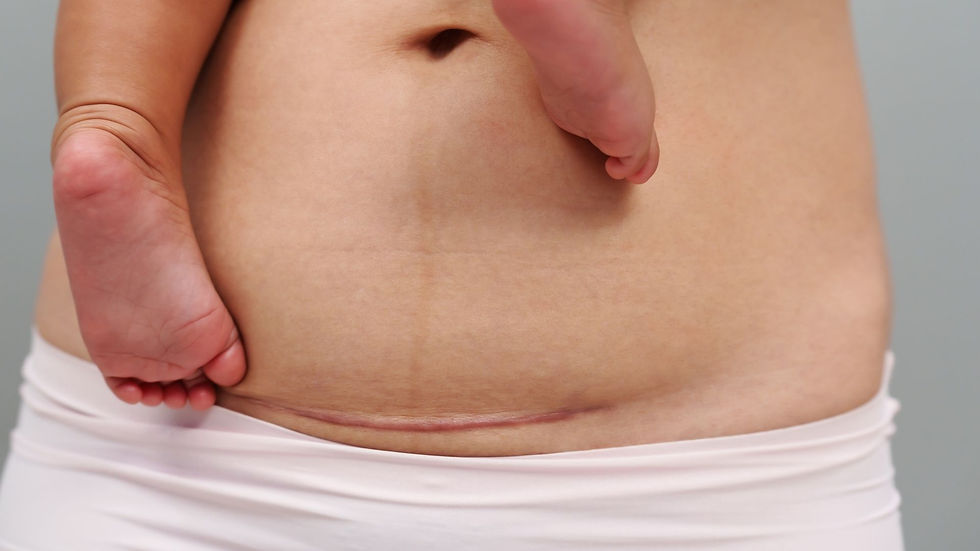
This is where Women's Health Physiotherapists play a critical role. At PhysioMatters Singapore, our team will assess your cesarean scar, abdominal and pelvic floor muscles to identify areas of weakness, overactivity, and/or scar tissue tightness.
Assessment
Scar tissue mobility and sensitivity
Deep abdominal muscle (transversus abdominis) activation and coordination
Pelvic floor strength and relaxation ability
Breathing patterns and intra-abdominal pressure management
Posture and load management during daily tasks
Interventions May Include
Scar massage and desensitisation: to improve tissue mobility, reduce tightness, and address skin sensitivity around the incision
Deep abdominal muscle re-activation: gentle, progressive exercises to reconnect with the muscles that support your core and spine
Pilates-based exercise programme: a structured, evidence-informed approach to rebuilding core strength safely and progressively
Pelvic floor rehabilitation: ensuring the pelvic floor works in coordination with the core, not in isolation
Education and load management: guidance on how to move, lift, and return to activities without placing unnecessary strain on healing tissues
The aim is not only to improve the appearance of your abdomen postpartum, but to restore safe, functional movement and reduce strain on the pelvic floor for the long term.
Understanding Your Recovery: What to Expect
Education and reassurance are central components of postpartum physiotherapy. Understanding that recovery occurs in layers, from the superficial skin to the deep fascial and muscular systems, empowers women to:
Manage expectations and avoid frustration with their progress
Avoid unnecessary strain during the critical healing window
Recognise when symptoms are worth getting checked
Safely and confidently return to the activities they enjoy
There is no one-size-fits-all timeline for cesarean recovery. What matters most is that both internal and external healing are given equal attention.
Ready to Support Your Full Recovery?
If you're unsure about getting back to exercise, have concerns about your core strength, or are experiencing pelvic floor symptoms such as urinary leakage or urgency after delivery, a review by our Women's Health Physiotherapists can help.
Early guidance ensures that both internal and external healing are addressed, helping you move with strength and confidence. Chat with our Women's Health Physiotherapists at PhysioMatters Singapore to find out more.
Cheers
Contact Information
Email: hello@physiomatters.com.sg
Tele: +65 9352 9067
Address: 360 Orchard Road #10-07 International Building, 238869



Comments